
OOH, DOOH or Digital? Your Brand Might Need Them Working Together
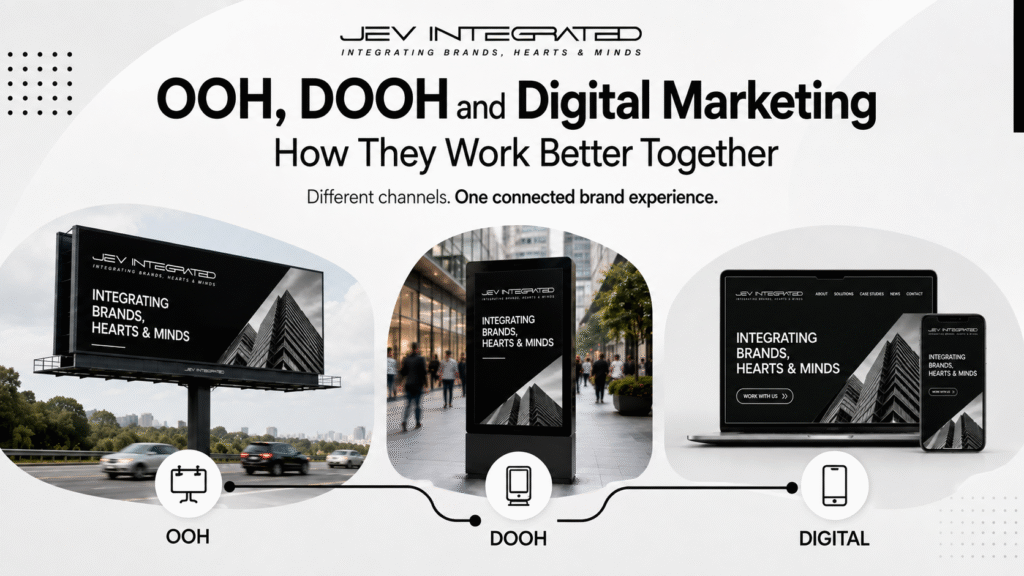
OOH, DOOH and Digital Marketing: How They Work Better Together
A customer notices your billboard while driving to work. Later that day, your digital advertisement appears while they’re scrolling through their phone. A few days later, they pass a digital screen displaying the same campaign and this time, the brand immediately feels familiar. Which channel did the job? That’s the wrong question. The real value came from all three encounters working together.
Businesses sometimes treat OOH, DOOH and digital marketing as competing choices. Should the budget go towards a static billboard? Would a digital billboard be better? Should everything move online because targeting is easier? At JEV Integrated, we look at these channels differently. Each one has strengths the others don’t, and when the campaign requires it, combining those strengths can solve a much bigger marketing problem.
OOH Builds Presence
Traditional Out-of-Home advertising gives brands something that’s difficult to replicate on a phone screen: physical presence in the real world. Billboards and other outdoor placements can become part of people’s daily journeys, particularly when they’re positioned along routes frequently travelled by the audience a business wants to reach.
This makes OOH particularly useful when the objective is sustained visibility and brand awareness. However, JEV doesn’t simply look for the biggest billboard available. We consider the target audience, location, traffic direction, surrounding area and campaign objective to determine where that physical presence actually matters.
A billboard seen by more people isn’t automatically better than one seen repeatedly by the right people.
DOOH Adds Flexibility to That Presence
Digital Out-of-Home takes many of OOH’s visibility advantages and adds something valuable: flexibility. Creative can change according to campaign requirements, multiple messages can be scheduled and brands have more freedom to keep their outdoor communication fresh.
That doesn’t mean DOOH automatically replaces static OOH. A long-term branding campaign may benefit from a static placement that keeps one message continuously visible, while a launch or time-sensitive promotion could gain more from digital flexibility.
JEV can evaluate both formats within the same media plan rather than assuming the newer technology is always the better answer.
Digital Marketing Gives the Audience Somewhere to Go Next
Outdoor advertising can make someone aware of your brand, but what happens when that person becomes interested?
This is where digital marketing can continue the journey. After noticing an OOH or DOOH campaign, someone might search for the brand, visit its website or encounter another advertisement online. Digital channels give businesses more opportunities to provide information, encourage interaction and move interested audiences closer to taking action.
The problem comes when the digital campaign looks and communicates nothing like the outdoor campaign. Instead of reinforcing recognition, the business effectively starts another conversation from zero.
At JEV Integrated, we’d rather connect those experiences.
One Campaign, Different Jobs
Let’s say a company is launching a new property development in Klang Valley. Instead of asking whether OOH, DOOH or digital should receive the budget, we’d first establish what the campaign needs each channel to accomplish.
The media strategy might look something like this:
- OOH: Maintain strong visibility along routes relevant to potential buyers.
- DOOH: Create additional impact around selected high-traffic locations or campaign periods.
- Digital: Provide more project information, reach interested audiences online and support enquiry generation.
All three channels have different jobs, but they point towards the same objective.
This is where integrated planning can also help businesses use their marketing budget more intelligently. Not every campaign needs equal spending across every channel, and not every campaign needs all three. JEV can determine where the audience is most likely to encounter the brand and allocate the media mix accordingly instead of spreading the budget everywhere just to create the appearance of a large campaign.
JEV Connects the Pieces
Managing several advertising channels can become complicated when different vendors are responsible for media, creative, digital execution and campaign coordination. Even when each party does its job well, the campaign can still feel disconnected if nobody is looking at the complete picture.
This is one of the problems JEV Integrated is built to solve. With capabilities covering media planning and buying, OOH, DOOH, digital, creative production and other advertising channels including television, radio and cinema, we can plan the campaign around one objective and coordinate how each relevant medium contributes to it.
That might mean using outdoor advertising to introduce the brand, DOOH to add flexibility and digital to capture interest. For another client, the combination could be completely different. The media changes because the business problem changes.
OOH gives your brand presence. DOOH adds flexibility. Digital marketing gives interested customers somewhere to continue the journey. Used separately, each can be effective. Used strategically together, they can turn several advertising placements into one connected brand experience.
Frequently Asked Question
What is the minimum duration for a billboard campaign in Malaysia?
The standard minimum booking cycle for static billboards in Malaysia is 4 weeks (1 month). However, Digital Out-Of-Home (DOOH) screens allow shorter, highly targeted runs ranging from a few days to 2 weeks for flash events and time-sensitive launches.
Why is 3 months (12 weeks) recommended for most outdoor ad campaigns?
A 12-week campaign strikes an optimal balance between audience reach and brand recall. It provides sufficient frequency for daily commuters to transition from initial brand awareness to consideration and online search behavior.
How often should you change billboard artwork during a long campaign?
For long-term campaigns lasting 6 to 12 months, refreshing artwork every 2 to 3 months prevents ad fatigue while maintaining prime site presence along key commuting routes.