
Launching a New Product? One Advertising Channel May Not Be Enough
How to Launch a New Product Using Multiple Advertising Channels
Launching a new product creates an interesting marketing problem: people can’t choose something they don’t know exists. You might have a great product, attractive pricing and strong branding, but the launch can still struggle if your audience only encounters it once before moving on with their day.
This is why putting the entire launch budget into one advertising channel isn’t always the strongest approach. Your customers move between physical and digital environments throughout the day. They commute, scroll through social media, search online, visit shopping centres, listen to the radio and consume entertainment. A good product launch doesn’t need to chase them everywhere, but it should identify the moments that matter and connect those moments into one campaign.
Start by Giving the Launch a Clear Job
Before JEV Integrated recommends any media, we need to understand what the launch actually needs to accomplish. A completely new brand entering Malaysia may need widespread awareness first, while an established company introducing another product may already have recognition and instead need to create excitement around what’s new.
That difference affects the entire media strategy. If awareness is the priority, high-visibility OOH or DOOH placements may play a bigger role. If the product requires explanation, digital content can provide more information after the initial exposure. If we’re targeting a particular community or location, the media selection can become much more focused.
The important part is that the channels aren’t selected independently.
Give Different Channels Different Jobs
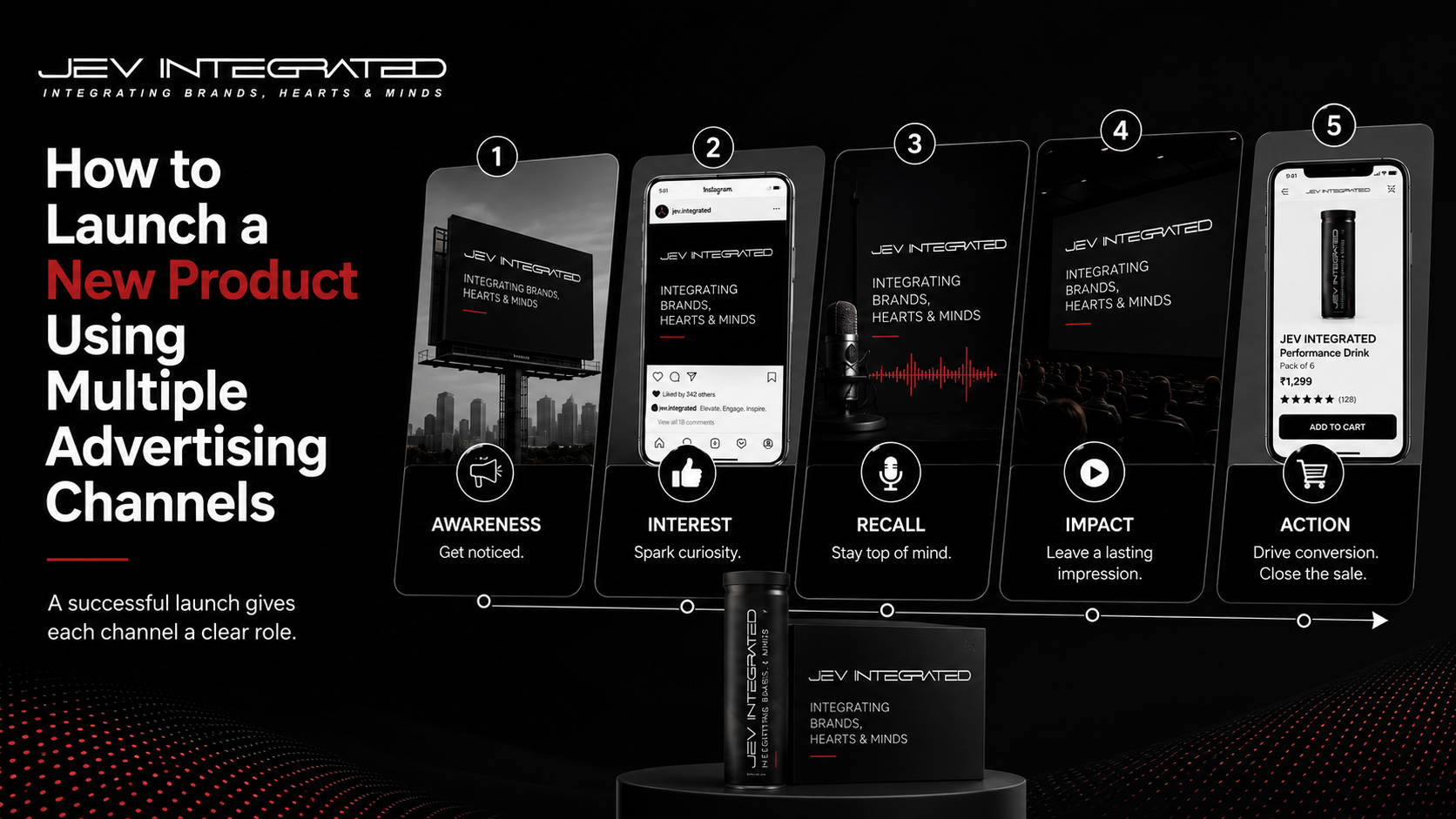
This is where integrated advertising becomes useful. Using multiple media channels doesn’t mean repeating exactly the same advertisement everywhere. Each channel can contribute something different while still supporting the same campaign idea.
For example, JEV could structure a product launch so that:
- OOH or DOOH creates visibility and introduces the product to a wider audience.
- Digital advertising builds interest by providing more information and directing people towards the brand.
- Radio or cinema adds reach and frequency where those audiences are relevant to the campaign.
- Creative content keeps everything connected, so the product looks and feels like the same launch wherever people encounter it.
The exact combination will depend on the product. We wouldn’t recommend all four simply because they’re available.
Make the Second Exposure Stronger Than the First
Imagine seeing an unfamiliar product on a digital billboard during your morning commute. You recognise the name but don’t think much about it. That evening, the same product appears while you’re browsing online. This time you stop because the brand already feels slightly familiar. A few days later, you search for it yourself.
That’s the advantage of connected advertising. The first exposure doesn’t always need to generate an immediate sale. Sometimes its job is simply to make the second exposure more meaningful.
This is also why consistency matters during a launch. If your outdoor campaign uses one visual identity while your digital advertising looks completely different, you’re making it harder for customers to connect those encounters. JEV can coordinate the media and creative direction so each touchpoint strengthens the recognition created by the previous one.
Don’t Spread the Budget Just to Look Bigger
There’s an important difference between integrated advertising and simply advertising everywhere.
If the budget is divided across too many channels without a clear reason, the campaign can become weaker rather than stronger. Each platform receives too little investment to create meaningful exposure, and the launch ends up being present in many places without being memorable anywhere.
This is a problem JEV Integrated can help prevent during the planning stage. Because our capabilities cover media planning and buying, OOH, DOOH, digital, television, radio, cinema and creative production, we can look at the launch as one campaign rather than several separate media purchases. If two channels can solve the problem effectively, there’s no reason to force five into the plan.
A Product Launch Should Feel Like One Big Moment
The strongest launches often create the impression that a product suddenly appeared everywhere relevant at once. Behind that impression, however, should be careful decisions about audience, timing, media and creative.
That’s what JEV Integrated helps businesses coordinate. We can identify the audience that needs to know about the product, determine which advertising channels can reach them, plan how those channels support one another and develop the creative needed to keep the message consistent from awareness through to action.
Launching a product successfully isn’t about buying as much advertising as possible. It’s about making sure every Ringgit has a job, every channel has a purpose and every customer touchpoint contributes to the same story.
When people encounter your new product for the second or third time, it shouldn’t feel like another advertisement. It should feel like a brand they’re already starting to know.
Frequently Asked Question
What is the minimum duration for a billboard campaign in Malaysia?
The standard minimum booking cycle for static billboards in Malaysia is 4 weeks (1 month). However, Digital Out-Of-Home (DOOH) screens allow shorter, highly targeted runs ranging from a few days to 2 weeks for flash events and time-sensitive launches.
Why is 3 months (12 weeks) recommended for most outdoor ad campaigns?
A 12-week campaign strikes an optimal balance between audience reach and brand recall. It provides sufficient frequency for daily commuters to transition from initial brand awareness to consideration and online search behavior.
How often should you change billboard artwork during a long campaign?
For long-term campaigns lasting 6 to 12 months, refreshing artwork every 2 to 3 months prevents ad fatigue while maintaining prime site presence along key commuting routes.